
Diaspora Hellene Alexander Khara Speaks on the Occasion of Four Years of War in Ukraine
2 бер. 2026, Новини діаспори


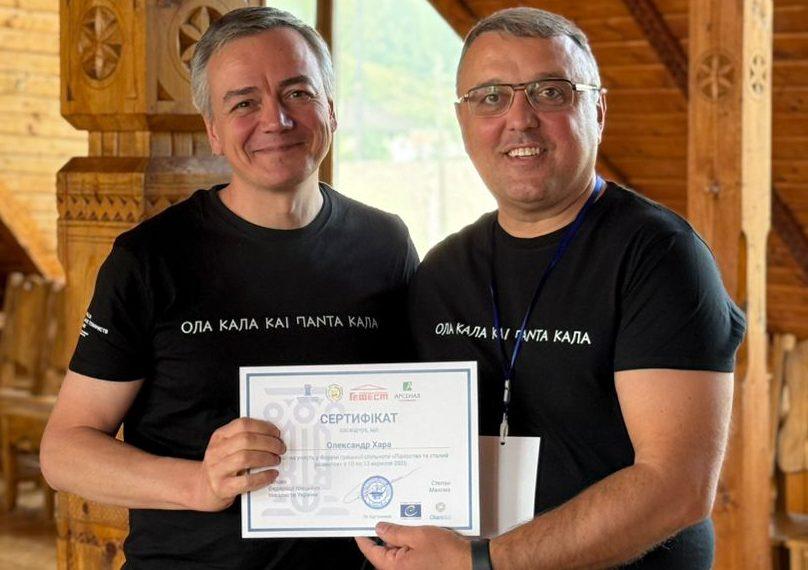
KYIV – It was February 24, 2022, when Russia invaded neighboring Ukraine. Now, just a few days after the fourth anniversary of that fateful day, The National Herald spoke with Diaspora Hellene Alexander Khara, Director of the Center for Defense Strategies and representative of the Federation of Greek Communities on the Council of Ethnic Minorities (Communities) of Ukraine of Ukraine.
“Russia invaded Ukraine in 2014, illegally annexed Crimea, and instigated a proxy war in the Donbas. Having failed to subjugate Ukraine by political means, the Kremlin launched a full-scale invasion in 2022. Its objectives were clear: to decapitate the Ukrainian state, occupy the entire country, destroy the Ukrainian Defense Forces and break the will of the population to resist. All of these aims failed,” he said.
The result, as Khara emphasized, is a high-intensity war of attrition in which “Ukraine is supported by more than 50 democratic nations. Russia, meanwhile, is sustained by China and receives military assistance from Iran and North Korea.”
Asked whether achieving a definitive resolution to the Ukrainian issue within 2026 is a realistic scenario, the Director of the Center for Defense Strategies expressed the belief that “there is not a slim chance of achieving a genuinely lasting peace in Ukraine.”
“Russia retains both the resources and will to dismantle Ukrainian statehood, and move beyond it. Vladimir Putin is determined to avoid accountability for war crimes, crimes against humanity, and acts of genocide, including those committed in Mariupol, Bucha, and dozens of other towns and villages.”
The Critical Decisions of the Ukrainian Leadership
“Volodymyr Zelenskyy’s decision to remain in Kyiv and lead the defense of the country was one of the pivotal moments of the war. By choosing to stay, rather than evacuate, he demonstrated that Ukraine’s constitutional order remained intact. The presence of a democratically elected head of state was a crucial precondition for Western partners to provide substantial – though ultimately insufficient – military and financial assistance within a clear legal and political framework,” Khara stressed when asked which leadership decisions over these four years were critical for the country’s survival.
He added that “while the full details of the political decisions that shaped the 2023 counteroffensive are not yet publicly available, its outcome was deeply disappointing for Ukraine. Conducted under the constraints of a U.S.-led strategy aimed at avoiding escalation with Russia, the operation was hampered by limited and delayed military support. In retrospect, the scale and timing of assistance were inadequate for the objectives set, and should arguably have prompted a different operational design.”
Alexander Khara with the President of the Federation of Greek Communities of Ukraine, Stepan Makhsma. (Photo: Courtesy of Alexander Khara)
BY EIRINI ZACHARIADIS
FEB 28, 2026
Diaspora Hellene Alexander Khara Speaks on the Occasion of Four Years of War in Ukraine
KYIV – It was February 24, 2022, when Russia invaded neighboring Ukraine. Now, just a few days after the fourth anniversary of that fateful day, The National Herald spoke with Diaspora Hellene Alexander Khara, Director of the Center for Defense Strategies and representative of the Federation of Greek Communities on the Council of Ethnic Minorities (Communities) of Ukraine of Ukraine.
“Russia invaded Ukraine in 2014, illegally annexed Crimea, and instigated a proxy war in the Donbas. Having failed to subjugate Ukraine by political means, the Kremlin launched a full-scale invasion in 2022. Its objectives were clear: to decapitate the Ukrainian state, occupy the entire country, destroy the Ukrainian Defense Forces and break the will of the population to resist. All of these aims failed,” he said.
The result, as Khara emphasized, is a high-intensity war of attrition in which “Ukraine is supported by more than 50 democratic nations. Russia, meanwhile, is sustained by China and receives military assistance from Iran and North Korea.”
Asked whether achieving a definitive resolution to the Ukrainian issue within 2026 is a realistic scenario, the Director of the Center for Defense Strategies expressed the belief that “there is not a slim chance of achieving a genuinely lasting peace in Ukraine.”
“Russia retains both the resources and will to dismantle Ukrainian statehood, and move beyond it. Vladimir Putin is determined to avoid accountability for war crimes, crimes against humanity, and acts of genocide, including those committed in Mariupol, Bucha, and dozens of other towns and villages.”
The Critical Decisions of the Ukrainian Leadership
“Volodymyr Zelenskyy’s decision to remain in Kyiv and lead the defense of the country was one of the pivotal moments of the war. By choosing to stay, rather than evacuate, he demonstrated that Ukraine’s constitutional order remained intact. The presence of a democratically elected head of state was a crucial precondition for Western partners to provide substantial – though ultimately insufficient – military and financial assistance within a clear legal and political framework,” Khara stressed when asked which leadership decisions over these four years were critical for the country’s survival.
He added that “while the full details of the political decisions that shaped the 2023 counteroffensive are not yet publicly available, its outcome was deeply disappointing for Ukraine. Conducted under the constraints of a U.S.-led strategy aimed at avoiding escalation with Russia, the operation was hampered by limited and delayed military support. In retrospect, the scale and timing of assistance were inadequate for the objectives set, and should arguably have prompted a different operational design.”
“This war has never been about territory per se. Many assumed that Vladimir Putin would be satisfied with the seizure of Crimea. He was not. His objective was – and remains – the subjugation of Ukraine and the restoration of Russia as a hegemonic power in Europe,” Khara told TNH.
Discussing how the nature and means of the war have evolved since February 24, 2022, he explained that “The character of the war has evolved significantly.”
“In its opening phase, Russian forces attempted to overwhelm the Ukrainian Defense Forces with large, massed formations. Instead, they became lucrative targets. Ukrainian resistance forced Russian troops to withdraw from Kyiv and other occupied territories in the north.”
He continued: “Since then, Ukraine has worked systematically to offset Russia’s numerical advantages on the battlefield. It has inflicted a functional defeat on the Russian Black Sea Fleet, pushing it away from Crimea and undermining Moscow’s dominance in the maritime domain. Ukrainian forces have conducted unprecedented operations on Russian territory, including the so-called ‘Spiderweb’ strikes, as well as cross-border operations in the Kursk region. In recent months, Russian casualties have reportedly exceeded the number of newly mobilized and deployed troops.”
In this context, Khara noted that the Ukrainian armed forces have demonstrated their ability to operate and modernize older Soviet-designed systems, as well as to rapidly master advanced Western weapons.
“In the absence of sufficient conventional air power and long-range missile capabilities, Ukraine has compensated through the large-scale development and deployment of unmanned systems. These have helped to erode Russia’s advantage in mass and firepower. Despite constant pressure, Ukraine’s defense industry has significantly expanded production of weapons and ammunition. There remains substantial untapped potential.”
Western Aid
“Western support remains vital to Ukraine’s capacity to defend itself,” Khara stressed. After expressing the Ukrainian people’s gratitude toward Western governments and supportive citizens, he added:
“We also deeply value the decision by our European partners to compensate for the suspension of U.S. assistance under the administration of Donald Trump. One reason for this shift is a growing recognition across Europe that this war is not simply about Ukrainian territory – nor even about Ukraine alone. It concerns the long-term peace and security of the continent. Russia views both NATO and the European Union as obstacles to its ambition of restoring hegemony in Europe.”
At the same time, amid current developments and ongoing negotiations mediated by the United States, Khara said he would not characterize the current process as genuine peace talks.
“The Kremlin believes time is on its side and has shown no willingness to abandon its maximalist objectives.”
Referring to American public opinion, which appears broadly supportive of Ukraine, he explained that “nevertheless, the current administration does not appear to regard Russia’s aggression against Ukraine as central to U.S. national interests. Since President Trump returned to office, the United States has not supported a single pro-Ukrainian resolution at the United Nations General Assembly, including the resolution on ‘Support for a lasting peace in Ukraine’ adopted on the fourth anniversary of Russia’s full-scale invasion just a few days ago. Nor has the administration greenlighted a bipartisan sanctions bill tabled a year ago.”
Khara added that “President Trump has made clear that he would like the war to end. Yet under the current trajectory it [is thought that it will] be achieved at the expense of Ukraine’s sovereignty and territorial integrity – and, by extension, Europe’s long-term peace and security. Ukraine’s diplomatic efforts have therefore focused on maintaining American engagement, seeking to ensure that Washington remains at least neutral rather than drifting towards Moscow’s position,” he said.
Economy and Society After Four Years of War
“Four years into Russia’s full-scale invasion, Ukraine’s displacement crisis remains among the largest in the world. Some 6.9 million Ukrainians are living as refugees abroad, while a further 3.7 million are internally displaced,” Khara noted as the discussion turned to the resilience of Ukraine’s economy and society.
“The damage to critical infrastructure has been severe. All 15 thermal power plants have been damaged or destroyed, and their contribution to the national energy mix has fallen from 23.5 per cent before the war to roughly 5 per cent today. Although the economy has shown notable resilience, it remains approximately 21 per cent smaller in real terms than in 2021. GDP growth slowed to around 1.8-2.0 per cent in 2025, with forecasts for 2026 ranging between 1.8 and 2.5 per cent.”
Regarding Ukrainian society, Khara said it “has adapted – and continues to adapt – to the conditions of war. Anyone walking through the streets of Kyiv and other cities will hear the constant hum of diesel generators powering small shops, shopping centers and office buildings – a stark reminder of both the strain on the energy system and the country’s determination to endure.”
Four Years of War and the Greek Diaspora of Ukraine
“Historically, Ukraine has been home to several distinct Greek communities, including the Azov Greeks, the Greeks of Nizhyn and Odesa, as well as Pontic and Thracian Greeks,” Khara noted. “The majority of Ukraine’s Greeks, however, originate from the Azov region. They were deported there from Crimea by the Russian Empire in 1778. In 2022, many members of this community were caught up in the devastation of Mariupol.”
He noted that “the precise number of Greeks killed by Russian forces is unknown. It is estimated that up to 100,000 Ukrainian citizens may have been buried in mass graves in the city. Before it was virtually razed to the ground, Mariupol had served as the recognized capital of the Ukrainian Greek community.”
“Special recognition,” he emphasized, “is due to Manolis Androulakis, Greece’s Consul General in Mariupol at the time of the siege. He repeatedly risked his life to evacuate Ukrainian Greeks and other civilians from the city as it endured relentless bombardment.”
Khara explained that, “today, around 80 per cent of Greek villages located between Donetsk and Mariupol remain under Russian occupation. For the Ukrainian Greek community, this amounts to a catastrophe. In response, the Federation of Greek Societies of Ukraine has worked to consolidate all the Greeks, and support those who fled occupied territories, whether they resettled in government-controlled areas or moved abroad. Its mission is to preserve the community’s unique identity, language, culture and heritage.”
In conclusion, Khara declared: “Ukrainian Greeks are an integral part of the country’s political nation. From the outset of Russia’s aggression in 2014, and again following the full-scale invasion in 2022, they have defended Ukraine – their motherland – and the Donetsk region, which many regard as their ‘little fatherland’. Several have fallen in the defense of Mariupol and Bakhmut. In addition, dozens of Greek nationals have joined Ukraine’s International Legion and are fighting alongside Ukrainian forces.”
Останні новини

Меморандум про співпрацю і партнерство із Національним музеєм народної архітектури та побуту України
🤝🏺 Федерація грецьких товариств України підписала Меморандум про співпрацю і партнерство із Національним музеєм народної
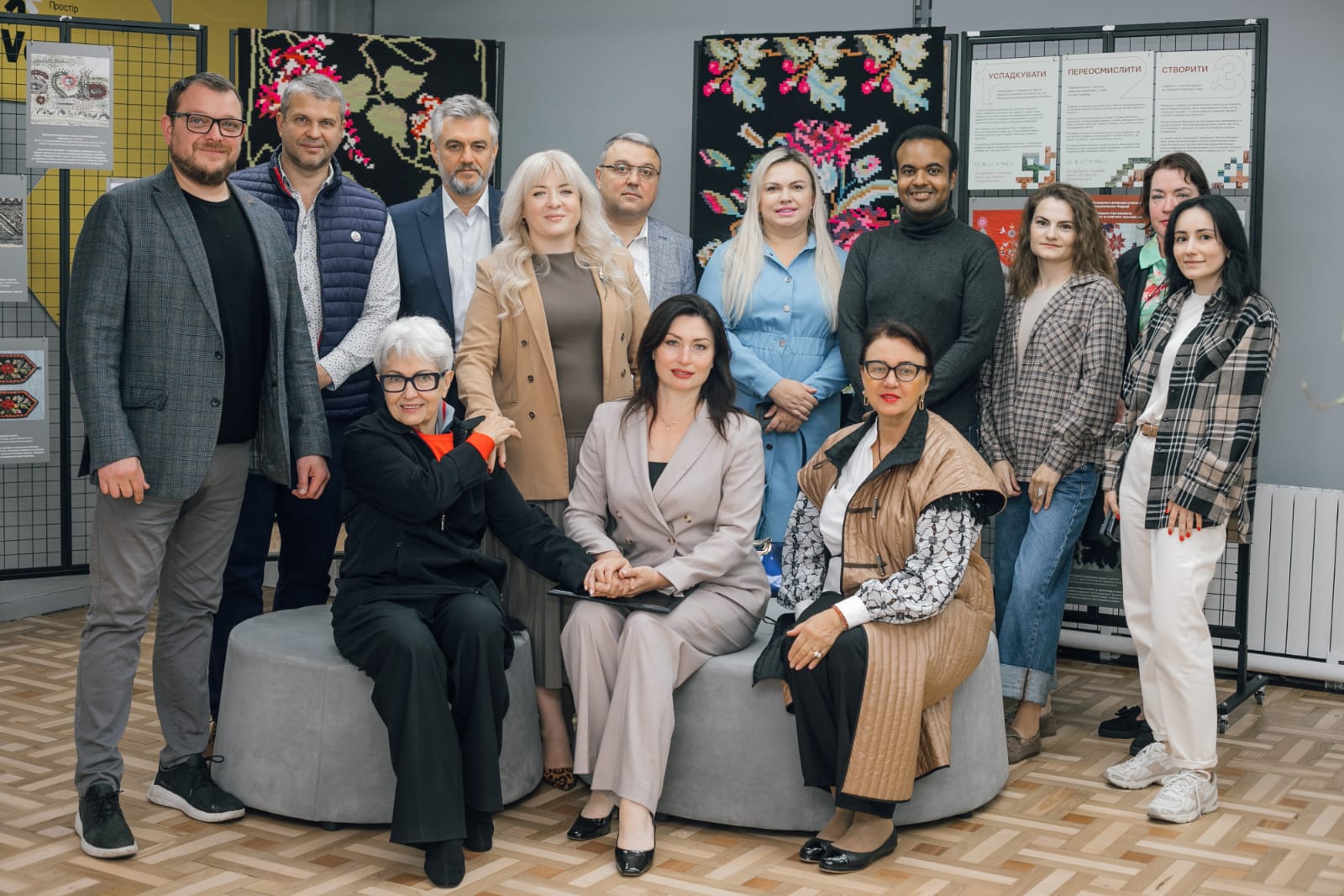
Відкритий діалог «Культура заради миру»
21 вересня, у Міжнародний день миру, відбувся відкритий діалог «Культура заради миру». Організаторами заходу стали Федерація
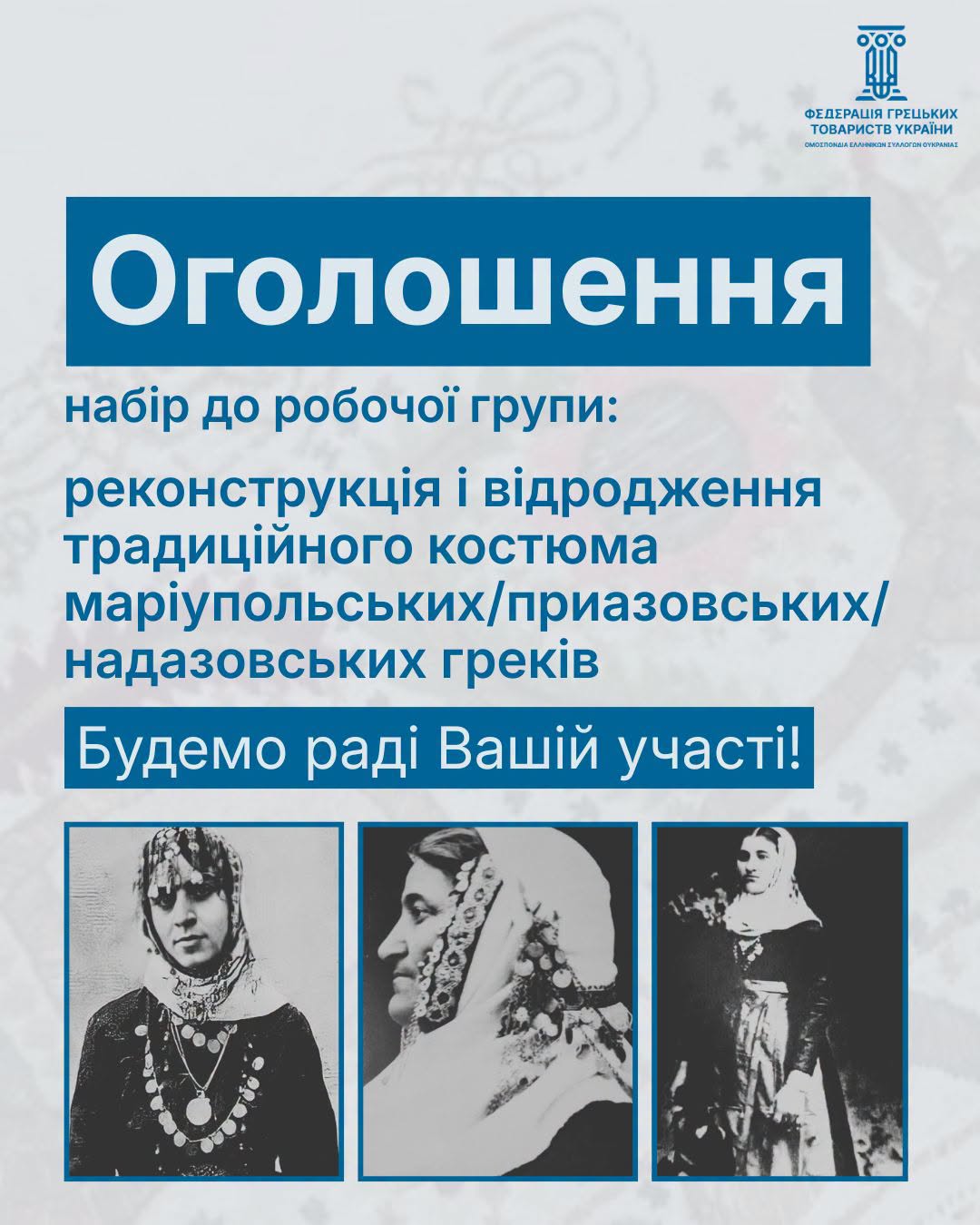
Набір до робочої групи для реалізації проєкту з дослідження, реконструкції та відродження традиційного костюма маріупольських/ приазовських/надазовських греків.
Федерація грецьких товариств України починає публічне обговорення та формує робочу групу для реалізації проєкту з дослідження,